Jung

Working with Symbols: manifesting Health, Wholeness and Meaning

In the Jungian system, there are four ways of using symbols in order to create meaning and depth in your life. The first way is as a tool for dialogue with unconscious content and its integration it into consciousness. The second way is to heal experiences of trauma or loss. The third way is to use symbols to imbue your life with meaning and magic. And the final way is to use symbols to resolve conflict and manifest conscious intent. Symbolising unconscious content in...


Anima mundi in transition: dystopian reflections and a slow boat to China

The theme for the IAAP (International Association of Analytical Psychology) to be held in Kyoto in 2016 is ‘Anima Mundi in Transition’, the movement of the world soul, or the world soul in transition. The central premise is that Jung highlighted a disconnection between man in modernity and his relationship to nature. The development of Western philosophy during the last two centuries has succeeded in isolating the mind in its own sphere and in severing it from its primordial oneness...

The Memories, Dreams, (and) Reflections of Linda Hawkins

The following piece, written by Linda Hawkins, is both a review of Jung's biographical book MDR (Memories, Dreams, Reflections) as well as her own reflections on life, the universe and everything in it; including her encounters over the last year with Applied Jungian Psychology.   Memories, Dreams, Reflections catapulted me into the depths of my own being; it has left me shaken, stirred, fuelled and ready for the next part of my own journey. Jung’s ability to share the story of his...

Jung’s dream house and discovering your own archetypal home

In Memories, Dreams, Reflections Jung reports a seminal dream in his discovery of the collective unconscious.  I was in a house I did not know, which had two storeys.  It was "my house".  I found myself in the upper storey, where there was a kind of salon furnished with fine old pieces in Rococo style.  On the walls hung a number of precious, old paintings.  I wondered that this should be my house and thought, "Not bad".  But then...

The Painful Experience of Free Will

After Stephen wrote his blog The birth of self, I felt compelled to add my 2 cents worth to the topic. It is quite a hard one to understand, yet very interesting and we have discussed it many times over the years. Does Free Will really exist? Philosophers have been debating the concept of free will for centuries. The main question is, do we have free will? This may sound ridiculous, but let's use the simple example of you deciding to drink...

Reeva and Oscar: A Mythological Perspective from Jung

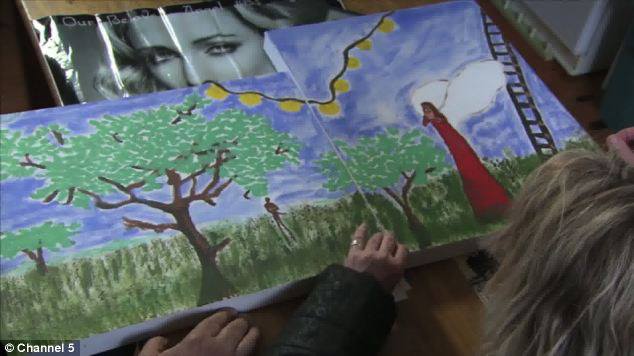
This post is an application of Jungian theory to offer an alternative way of understanding the tragic event of Reeva Steenkamp’s death at the hands of Oscar Pistorius. It is a continuation of the post A bullet in the chamber: a Jungian perspective on a murderous gun complex Reeva painted these pictures when she was 14, they've been in the house for a long time now, but we never really realized what they were about. here is a man standing...

Introducing Jungian Psychology by Robin Robertson (book review)

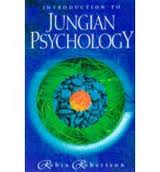
Tasha Tollman reviews an Introduction to Jungian Psychology. In Introducing Jungian Psychology, Dr Robertson provides the reader with the overall feel of Jungian psychology, sketching out a basic outline of the concepts and providing modern day examples.The book introduces the concepts of conscious, personal unconscious and collective unconscious as Roberston unpacks the structure and dynamics of the psyche; the meaning of dreams; personality types and archetypes before presenting Jung’s more abstract concepts about the processes that interact as one struggles...

The encounter with the Shadow: a key moment on the journey to individuation

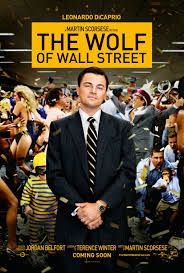
The shadow, Applied Jungian Psychology, The Wolf of Wall Street Discussion about the shadow can be split into three broad categories: Everything has a shadow – more specifically, every choice, every action, and every encounter, carries within itself a shadow. This is the simple idea that what is explicit, what is seen, what is manifest holds an implicit opposite. Our intentionality is directed to the “object” in a specific fashion. The philosopher John Searle describes it as consciousness having an "aspectual"...

Digesting Jung – by Daryl Sharp (book review)

Tasha Tollman reviews Digesting Jung   Call it coincidence, synchronicity, destiny, fate – in one moment my life collided with the work of Carl Gustav Jung and changed forever. At that moment I became a stranger travelling in some exotic land where the natives spoke a peculiar language using words like “persona”, “shadow”, “anima/animus”, “typology”, “projection”, “complexes”, “archetypes” and “individuation” - words that resonated deep inside of me and called me to a journey of self-development and individuation.  Searching for a...

Understanding your brand: what would you look like as a coffee shop?

One of the tremendous gifts we have inherited from Jung is a better appreciation of the power of imagination. The imaginative (image making) faculty grants us access to areas of psyche that are not accessible in any other way. Images from the unconscious (which is where our images come from in any imaginative exercise) have a holographic-type nature, in that they contain a depth of information that goes far deeper than the surface of the image and affords access to otherwise...