Jungian Themes

The Memories, Dreams, (and) Reflections of Linda Hawkins

The following piece, written by Linda Hawkins, is both a review of Jung's biographical book MDR (Memories, Dreams, Reflections) as well as her own reflections on life, the universe and everything in it; including her encounters over the last year with Applied Jungian Psychology.   Memories, Dreams, Reflections catapulted me into the depths of my own being; it has left me shaken, stirred, fuelled and ready for the next part of my own journey. Jung’s ability to share the story of his...

Jung’s dream house and discovering your own archetypal home

In Memories, Dreams, Reflections Jung reports a seminal dream in his discovery of the collective unconscious.  I was in a house I did not know, which had two storeys.  It was "my house".  I found myself in the upper storey, where there was a kind of salon furnished with fine old pieces in Rococo style.  On the walls hung a number of precious, old paintings.  I wondered that this should be my house and thought, "Not bad".  But then...

A tool to identify your transference: understanding your unconscious communication in relationships

Transference- countertransference, Lacan, Jung Transference as a technical term in depth psychology describes the process whereby unconscious content is shared between patient (analysand) and analyst in the context of their therapeutic relationship (analysis). Although used to refer to this specific relationship dynamic in analysis, transference is a very real dimension of all social interaction, it is by no means limited to the analytical couple (analyst and analysand). This is the third in a series of three short articles I have written on...

The Painful Experience of Free Will

After Stephen wrote his blog The birth of self, I felt compelled to add my 2 cents worth to the topic. It is quite a hard one to understand, yet very interesting and we have discussed it many times over the years. Does Free Will really exist? Philosophers have been debating the concept of free will for centuries. The main question is, do we have free will? This may sound ridiculous, but let's use the simple example of you deciding to drink...

Reeva and Oscar: A Mythological Perspective from Jung

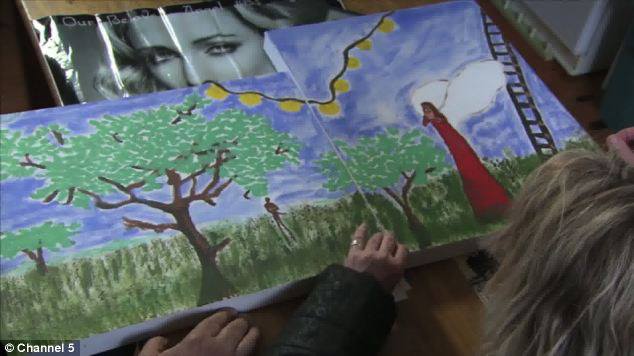
This post is an application of Jungian theory to offer an alternative way of understanding the tragic event of Reeva Steenkamp’s death at the hands of Oscar Pistorius. It is a continuation of the post A bullet in the chamber: a Jungian perspective on a murderous gun complex Reeva painted these pictures when she was 14, they've been in the house for a long time now, but we never really realized what they were about. here is a man standing...

The Library of the Mind: imaginal photography and your thinking function

    Logos, reason, (directed) thinking, animus, intellect, imaginal photography C. G. Jung divides the mind into four distinct psychological functions: thinking, feeling (or evaluation), intuition, and sensation.[1]  The function we are going to consider in this post, thinking, is the psychological function which, following its own laws, brings the contents of ideation [ideas] into conceptual connection with one another. It is an apperceptive activity, and as such may be dived into active and passive thinking.  Active thinking is an...

The encounter with the Shadow: a key moment on the journey to individuation

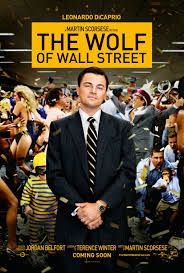
The shadow, Applied Jungian Psychology, The Wolf of Wall Street Discussion about the shadow can be split into three broad categories: Everything has a shadow – more specifically, every choice, every action, and every encounter, carries within itself a shadow. This is the simple idea that what is explicit, what is seen, what is manifest holds an implicit opposite. Our intentionality is directed to the “object” in a specific fashion. The philosopher John Searle describes it as consciousness having an "aspectual"...

Understanding your brand: what would you look like as a coffee shop?

One of the tremendous gifts we have inherited from Jung is a better appreciation of the power of imagination. The imaginative (image making) faculty grants us access to areas of psyche that are not accessible in any other way. Images from the unconscious (which is where our images come from in any imaginative exercise) have a holographic-type nature, in that they contain a depth of information that goes far deeper than the surface of the image and affords access to otherwise...

The Individuation Project: a Jungian journey to self actualisation

Individuation is the act of becoming a distinct and integrated unity. It is the explicit realisation of what was previously implicit and latent. Once a rose individuates it is no longer just a flower or even just a rose; it is a rose of a definite and distinct type. Now naturally in the case of a rose this is just what it always was, it was always a rose of this type. However, this distinct type and its characteristic...

Counter-transference:the Obscene Other

In my last post Transference: the Saviour the Madonna and the Slut, I dealt with the issue of transference and some of the ways this affects our lives and our relationships. Now I want us to consider the flipside of that coin, counter-transference. Simply, counter-transference is what happens when someone transfers onto you and you react to their transference. This reaction can take two typical forms: You transfer your unconscious contents onto them in response to their transference, which means...