Author - Stephen Farah

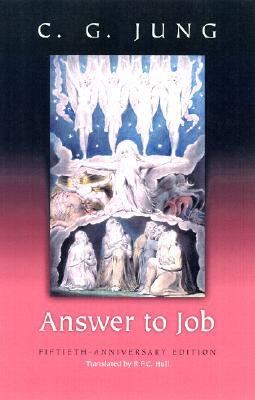
Answer to Job, by C. G. Jung: book synopsis

Answer to Job was first published in 1952 in German and was included in Jung’s “Collected Works”, as part of volume 11. It was published in English in 1954. It is regarded as one of Jung’s most controversial works. In Answer to Job, Jung demonstrates his in-depth knowledge of the Bible; however, what makes the book remarkable is the fact that it is a personal and authentic exposition of the subject of human suffering as it relates to the Christian religion. Jung...

The desire – drive dissonance and why you can’t always get what you want.

Sigmund Freud[1]and the birth of psychoanalysis gave rise to the idea of a “drive” and “drive theory”, (in German “trieb” and “Triebtheorie”. )[2] A drive, in this sense, is a psychical phenomenon that represents an unconscious motivation or instinct[3] in the subject’s psychology. The two most prominent of these drives for Freud are Eros, the sexual creative drive, and Thanatos, the aggressive and destructive death drive (Toedestrieb).[4] An important feature, maybe the...

A short course in Wrestling an Angel

The mistake is to think of angels as cherubs. They’re not. That was just the romantic imagination of renaissance art. A more accurate perspective of the angel, at least psychologically, is provided by the Old Testament story of Jacob, who wrestled with the Angel of the Lord. To put it plainly, the angel fucked him up. He escaped with his life intact, no mean feat after seeing the face of God[1], but, not without suffering a dislocated hip,...

Albedo: dialogue with the soul

What does it mean to enter into a dialogue with your soul? Jungian psychology is unusual in being a psychology for the healthy. Although Jung’s unique and original approach is a highly effective psychotherapeutic method, it goes beyond the narrow focus of medical psychotherapy. Jung and his Magnum Opus[1] provides an extraordinary system of psychological and spiritual growth and transformation. Whilst it is impossible to do justice to the method in a few sentences, or even to clearly state...

The Middle Passage, from Misery to Meaning in Midlife by James Hollis

This book review is by Lynelle Pieterse and will be explored in the bookclub. Follow this link to join the Jungian Bookclub. James Hollis received his Diploma in Analytical Psychology from the C.G. Jung Institute in Zurich, and is the Director of the C.G. Jung Educational Center in Houston, Texas. He is a frequent guest speaker who spends winters in analytic practice and writes during the summers. In his books, he elaborates on the theories of C. G. Jung. Contemplated...

Psyche and Cinema: The Shining

The Shining: Complexes This is from our Psyche & Cinema series and looks at the Jungian psychology concept of Complexes. This idea is explored through the experience of the main character Jack Torrance's interaction with the ghost Grady. The Magnum Opus of Jung's work was the pursuit of individuation. The Centre for Applied Jungian Psychology is now presenting Nigredo, the first stage of the Magnum Opus. Presented online over 12 weeks, Nigredo will explore the concepts of Archetypes, Complexes, Projection and Shadow. The tools and skills required for the...

Psyche and Cinema: Artificial Intelligence

Artificial Intelligence: Anima This is from our Psyche & Cinema series and looks at the Jungian psychology concept of Anima. This idea is explored through the experience of the main character David, who is an artificial boy. The Magnum Opus of Jung's work was the pursuit of individuation. The Centre for Applied Jungian Psychology is now presenting Nigredo, the first stage of the Magnum Opus. Presented online over 12 weeks, Nigredo will explore the concepts of Archetypes, Complexes, Projection and Shadow. The tools and skills required for the ongoing...

Psyche and Cinema: The Matrix

The Matrix: Consciousness and Truth. This is from our Psyche & Cinema series and looks at three key ideas from Jungian psychology through the lens of the 1999 film, The Matrix: the 2nd personality as the doorway to individuation, our neuroses as a psychic prison and the relationship of truth to consciousness. Phoenix painting by Benjamin A. Vierling The Magnum Opus of Jung's work was the pursuit of individuation. The Centre for Applied Jungian Psychology has launched a brand new four stage programme to guide you...

The Body and the Blood

When I was a kid, for as long as I can remember, every Friday night, we would go to my grandmother’s house for a family supper. As my mother and one of my aunts were fond of saying, “Every road leads to Mayfair,” the suburb my grandmother’s home was located.  We would go there for what I can only describe as a feast. My grandmother, God rest her soul, would prepare a feast for us every single week, without fail. My...

The Spectre of the “Other” in Jungian Psychology

The Spectre of the “Other” in Jungian Psychology 2017 Conference on Jungian Psychology International Conference of the International Association for Jungian Studies www.jungstudies.net August 3rd – 6th, 2017 Cape Town, South Africa   Call for Papers “I do not know what Africa is really saying to me, but it speaks.” (Jung in a letter to Emma in Memories, Dreams, Reflections) We invite you to participate in a gathering of academics, analysts, students and others interested in exploring a Jungian conceptualization of Otherness, and how such ideas interface with...