Tuition fee: a single payment of $350, or two payments of $185
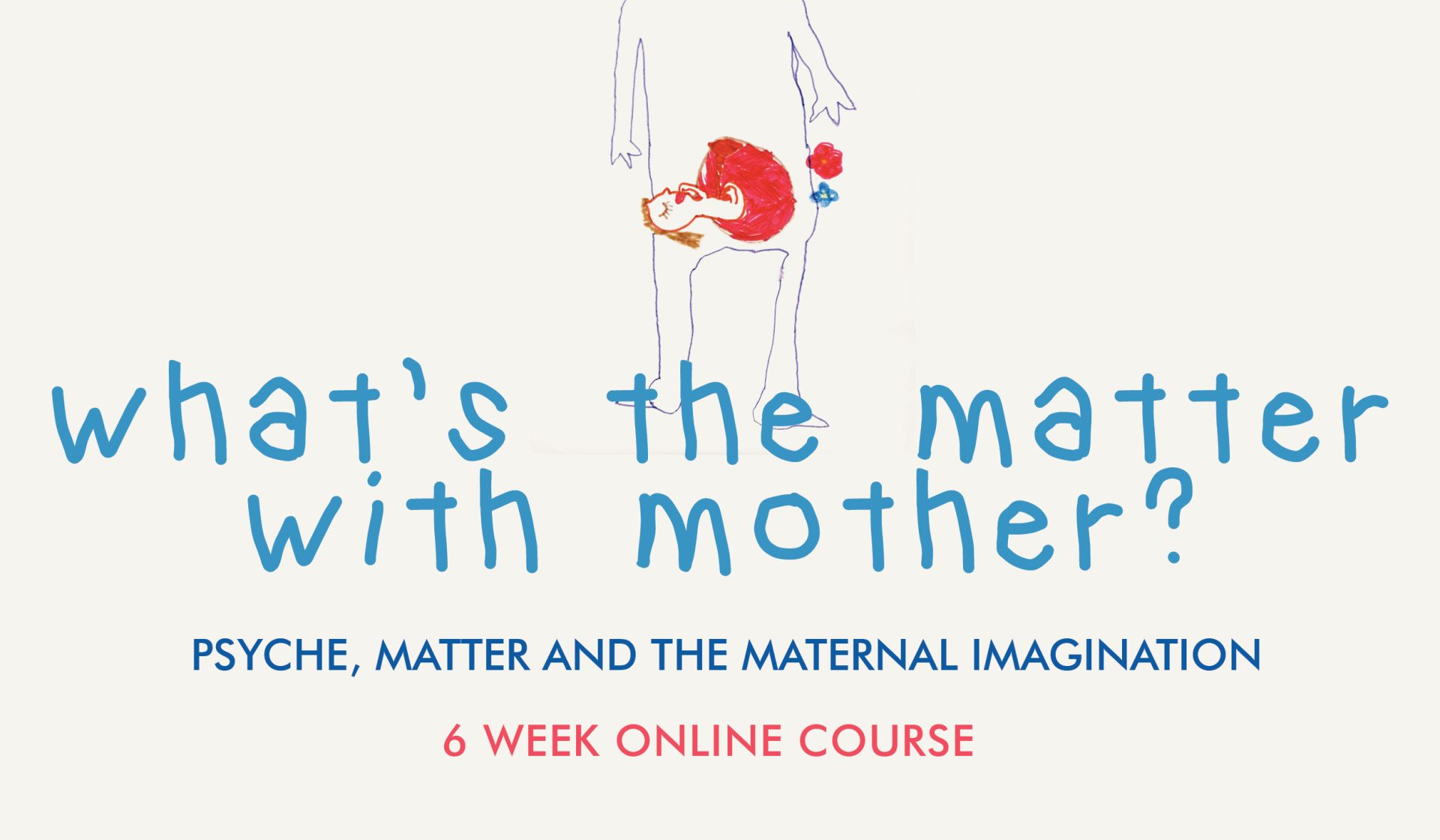
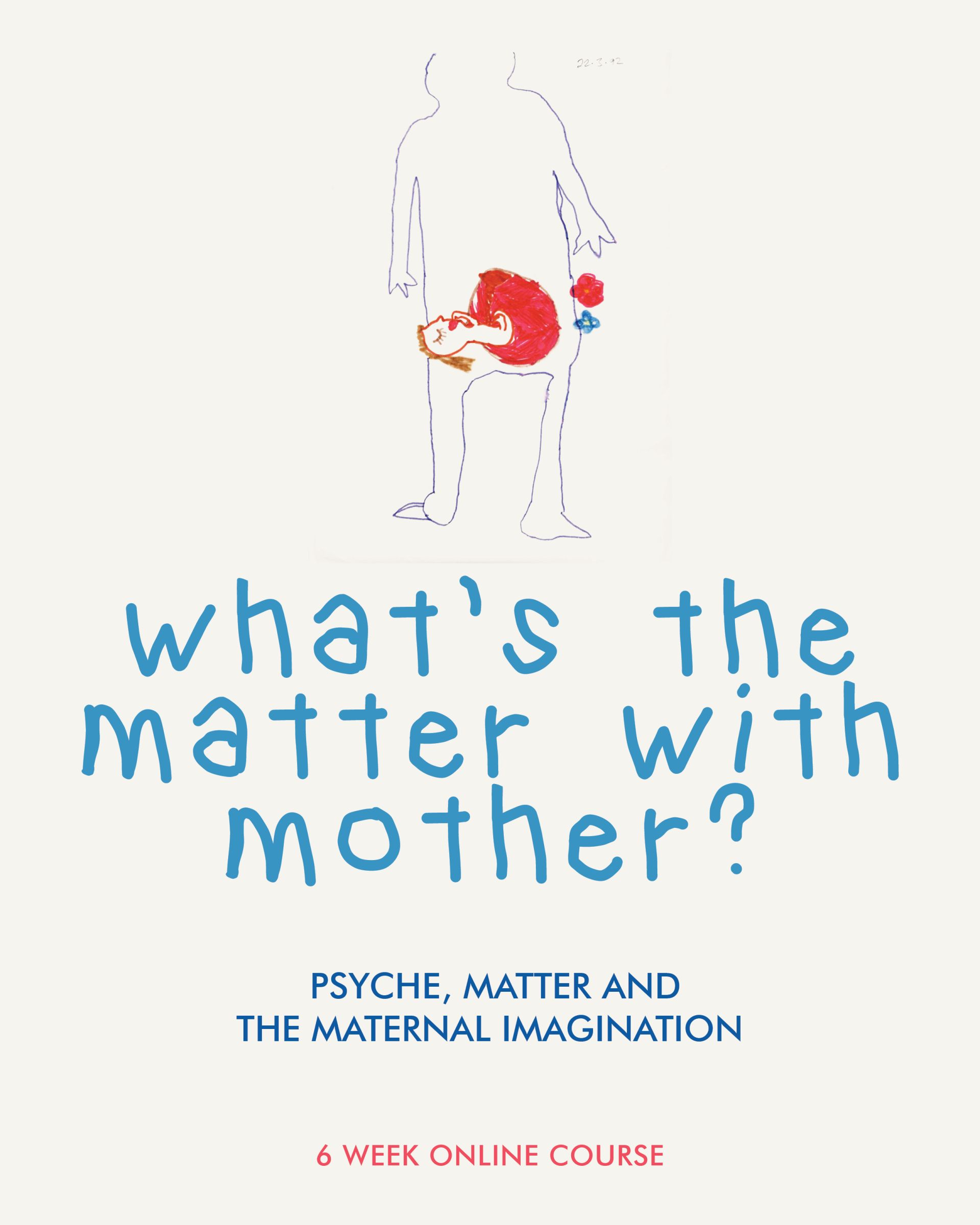
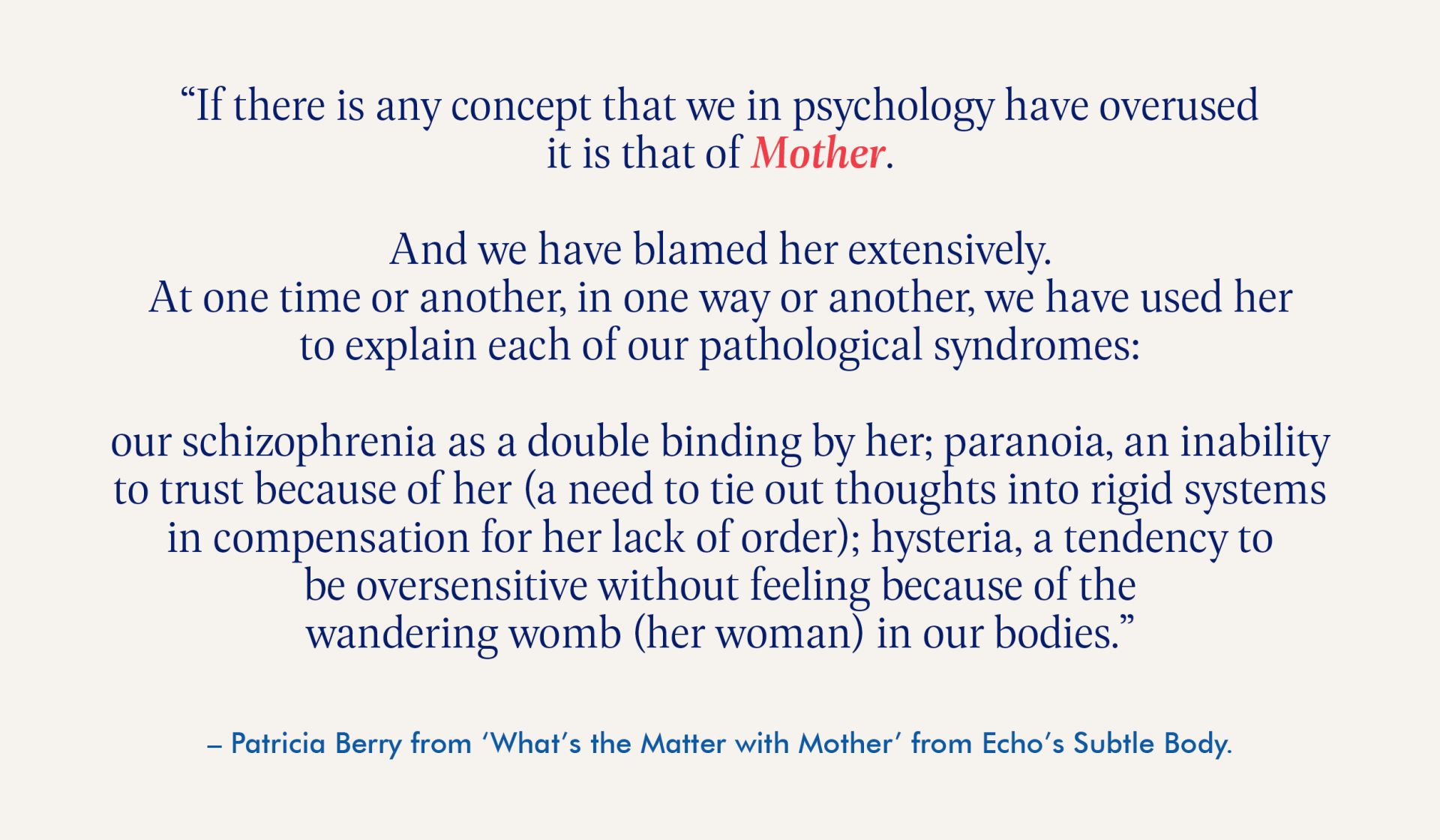
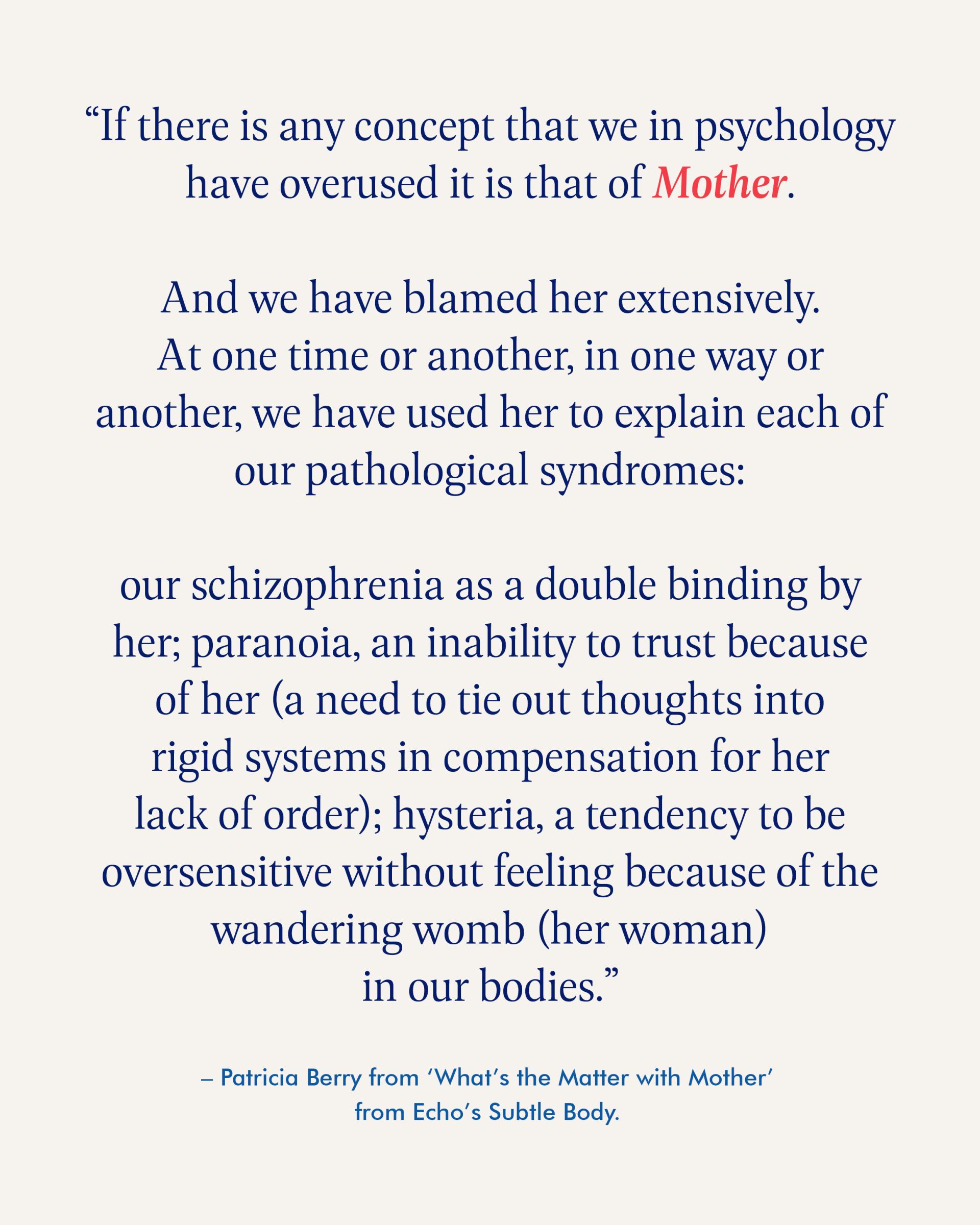
This course attempts to understand how the imaginal image of mother impacts, affects and effects our interactions with ourselves, others and the world.
Course Description
This course turns toward the archetype that perhaps most profoundly structures psychic life, at least within the Western imagination: the mother.
Beyond the personal mother, we examine the Great Mother as an organizing principle of psyche, tracing how she governs the territories of innocence and injury, nourishment and deprivation, descent and return.
The maternal archetype is not simply protective; it is also demanding, destructive, and inseparable from the cycles of chaos and order through which psychological life takes shape.
We explore these themes through the mother-daughter dyad of Demeter and Persephone, and later through Eve, the mythic mother of humanity.
Drawing on Jungian and post-Jungian thought, the course considers how maternal patterns shape the mythology of the child and the hero, some of the dynamics of the upperworld/underworld journey, and the therapeutic encounter itself.
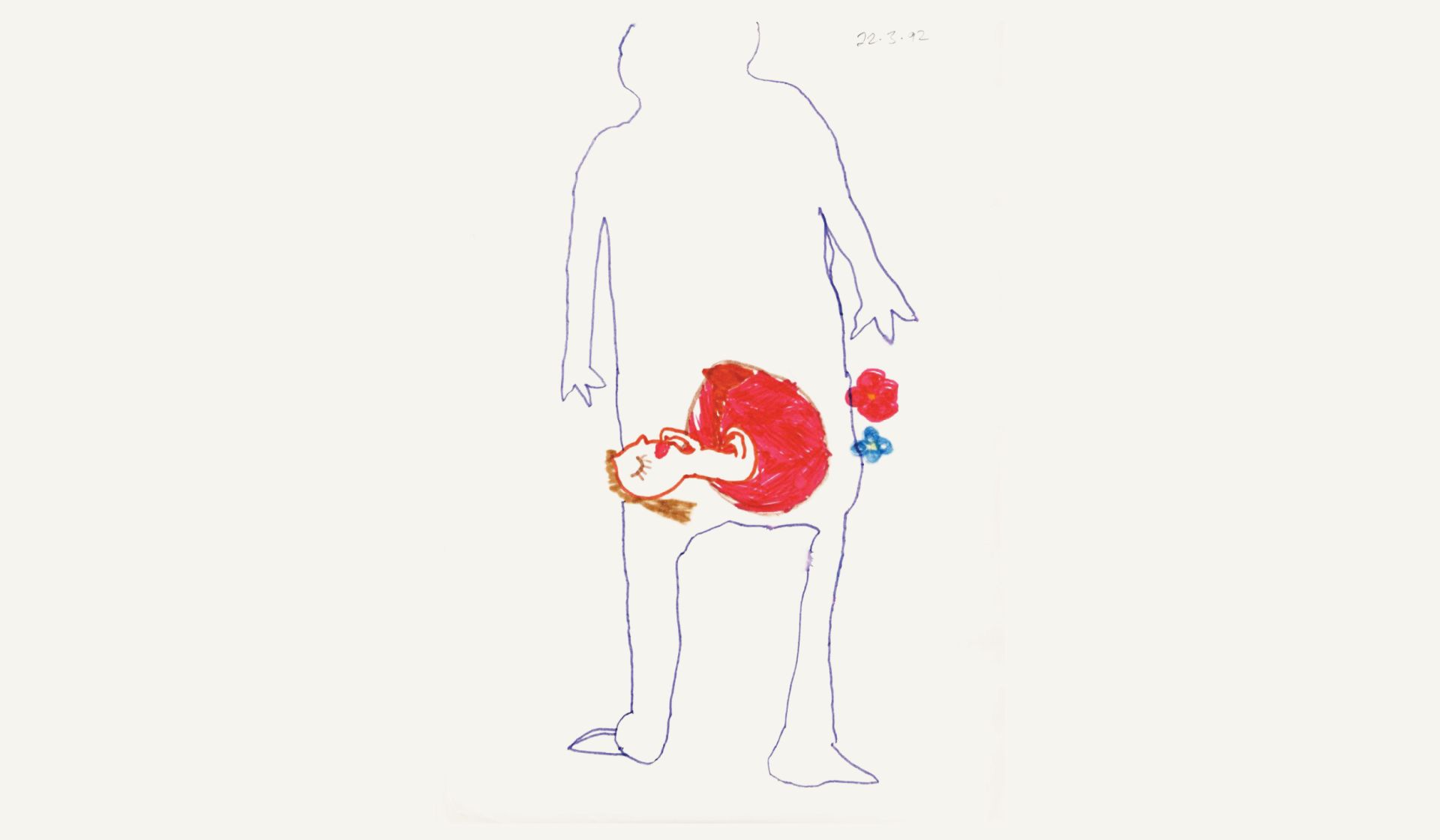
Neurosis emerges here as both a defense against rupture and the polymorphic universe. And rupture itself as a necessary force that deepens us into relationship with the instability, ambivalence, and imaginal reality of the mother image. As the archetype most closely associated with the mattering of our lives—mother, matrix, matter, mater—the mother image speaks directly to embodiment and our sense of being real.
Somatic sessions therefore form an essential part of this course, offering a way to investigate how our image of the maternal is lived and related to and through the body. By attending to the felt assumptions we take for granted, we begin to encounter the unconscious literalisms that ground our experience of self, world, and reality itself.
Course Details
Live Sessions
Saturday 12th September
KEYNOTE: LIVE LECTURE
90 Minutes
‘Mothers: Idealization, Denigration, Speculation – Past, Present and Future,’
presented by Professor Andrew Samuels
*
Sunday 13th September
90 Minutes
Saturday 17th October
LIVE INTERACTIVE SEMINAR
90 Minutes
*
Times: live Zoom webinars will start at PM Cape Town, 5 PM London, 12-midday NYC
______________
Workshops
‘Building the Psychic Body’ four Embodiment and Movement workshops led by Nico Athene.
Saturday 19th September
WORKSHOP #2
2 Hours
WORKSHOP #3
2 Hours
Saturday 10th October
2 Hours
*
______________
Pre-recorded Sessions
presented by Professor Giovanna Colombetti
*
presented by Siobhan Brodie
*
‘Death Desires of Virgins - Escaping Neurotic Consciousness’
presented by Elizabeth Nelson
*
presented by Nan McAughey
(3 presentations each dealing with a mythological theme related to mother)
______________
Presentations Details
Mothers: Idealization, Denigration, Speculation – Past, Present and Future
by Professor Andrew SamuelsAnalysts and psychotherapists may know less about the mother than they think they do! Archetypal theory and object relations contradict each other. The swing from a focus on the father to one on the mother has not helped us get rid of parental essentialism, in which their roles are sharply – and suspiciously contrasted. Are mother and father such ‘complementary opposites’? And at all times and in all cultures? For decades, feminists have pointed out that the therapies have indulged in an orgy of mother-blaming. And, I add, of unhelpful idealization of the mother. In the talk, I will try to get a balance of clinical utility and cultural exploration.
*
Building the Psychic Body (Embodiment Workshops Series)
by Nico Athene
In this workshop series, we explore our relationship to the Mother archetype through the body, approaching her not as a fixed image but as unstable, shifting and generative ground—the creative matrix through which we dream, embody and make meaning of our lives, often unconsciously. From a post-Jungian perspective, the body is a primary site of image-making: a way of encountering both what seems concrete in life - literal and given- and what arises as autonomous images, felt as sensation and movement before we contain, justify, or control them with interpretation. This series offers another way of working, by deepening into our own matrix to explore our responses and symptoms not as something to be fixed, but as a requiem for the ways in which we uniquely make soul.
*
Mother-a Complicated Relationship: parts 1 & 2: Interactive Student Seminars
by Stephen Anthony Farah
In these seminars we will focus on the personal relationship with our respective mothers. We will bring them into the seminar space as historical, imaginary, and archetypal figures. Considering how we locate and relate to our mothers in our imaginal and psychic topographies. We will very gently (and somewhat gingerly) consider what we may have gained and lost in relationship to this most significant other, and how that now informs us in our relationships both to others and ourselves. These seminars will be an opportunity for relatively informal interaction, reflection and discussion about this theme: how “mother” lives in us and how this relationship may be unconsciously informing us.
*
The Matters of Mother: Three Mythologies
by Nan McAughey
The ancient Greeks, who had no depth psychology or psychopathology, knew that our lives go according to the narrative that is living us. They believed myths and archetypal figures predate us, taking deep hold of our emotions and thoughts to give form and meaning to our responses to the world. This is a series of three audio-visual presentations explores three faces of the Mother archetype.
Gaia — Mother Earth, the generative root beneath every mother-child bond. The lecture traces castration as the founding gesture: heaven cut from earth, spirit set against matter — and the all-consuming violence at the very origin of things.
Eve — The human mother of the Western Christian tradition where severance hardens into exile. Gaia's cosmic split becomes, under this tradition's misogyny, a moral hierarchy: Eve punished for choosing knowledge over instinct. The punishment exceeds the act — Church fathers cast the feminine out and make her carry evil. A cosmological inferiority turns personal, and finally diagnosable as hysteria.
Mary — The body is taken back into spirit. Where Christ's Ascension leaves the body behind, Mary's Assumption — read through Jung and Hillman — builds the heart as the psychic container for imagination: the faculty through which we hold instinct and intellect together. Wisdom, once cast out as gnostic heresy, returns as relational sovereignty.”
*
The Foul Soil: Learning to Rot in Mother’s House
by Siobhan Brodie
The Foul Soil enters the maternal not as biography, but as psychic ground: dark, fertile, decomposing, where what has outlived itself must rot before something new can emerge. Midlife brings the ego to the limits of its defended autonomy and asks for a descent into the chthonic depths - for women, into a radical receptivity beyond accommodation and approval; for men, into the body as vessel for what cannot be controlled. If we can bear the disorientation and fragmentation of this descent, something miraculous may occur. Not a better self, but the soul herself begins to emerge. And she is beautiful. The maternal, once feared as engulfing, is revealed as the ground in which life was waiting all along. The descent becomes the ascent: not away from the mother, but through her, through the Great Round of decay, gestation, emergence and return. We do not become ourselves by remaining untouched. We become ourselves by becoming soiled.
*
Mothering in the Round: Gaia, Demeter, Persephone, Hecate
by Elizabeth Éowyn Nelson, PhD
The Homeric Hymn to Demeter teases readers with intimations about the complex relationship between the goddess Demeter and her nameless daughter, the kore. Over the course of the narrative, the naïve and untested kore becomes the dread queen of the underworld Persephone. This lecture begins with a feminist reading of the daughter’s journey from maiden to queen, then shifts perspective to consider how loss, grief, and rage ultimately grant the mother fresh access to her own considerable power. The lecture explores two other enigmatic goddesses featured in the Hymn, Gaia and Hekate. Though mentioned only briefly, they frame the story at its beginning and at the end and are instrumental in the transformation of both Demeter and Persephone. All four goddesses offer differentiated images of archetypal mothering. Taken together, they portray mothering in the round.
*
The Feeling Body: Affective Science Meets the Enactive Mind
by Professor Giovanna Colombetti
In this discussion about the he Feeling Body, Giovanna Colombetti takes ideas from the enactive approach developed over the last thirty years in cognitive science and philosophy of mind and applies them for the first time to affective science -- the study of emotions, moods, and feelings. She argues that enactivism entails a view of cognition as not just embodied but also intrinsically affective, and she elaborates on the implications of this claim for the study of emotion in psychology and neuroscience. In the course of her discussion, Colombetti focuses on long-debated issues in affective science, including the notion of basic emotions, the nature of appraisal and its relationship to bodily arousal, the place of bodily feelings in emotion experience, the neurophysiological study of emotion experience, and the bodily nature of our encounters with others. Drawing on enactivist tools such as dynamical systems theory, the notion of the lived body, neurophenomenology, and phenomenological accounts of empathy, Colombetti advances a novel approach to these traditional issues that does justice to their complexity. Doing so, she also expands the enactive approach into a further domain of inquiry, one that has more generally been neglected by the embodied-embedded approach in the philosophy of cognitive science.
______________
Registration and Bookings
Course Starts Saturday, September 12, 2026
Payment Options
Access to Course Platform with all learning materials
Access to the live zoom sessions and recordings
Access to the facilitated private course forum
______________
Faculty
Andrew Samuels
Elizabeth Nelson
Elizabeth Éowyn Nelson PhD, faculty of Pacifica Graduate Institute since 2003, teaches
and speaks internationally and has published numerous scholarly essays on
subjects including animals, dreams, feminism, film, mythology, research,
somatics, and technology. Dr. Nelson’s books include Psyche’s Knife (Chiron, 2012), The
Art of Inquiry (Spring, 2017), coauthored with Joseph Coppin, and The Art of Jungian Couple Therapy,
coauthored with Anthony Delmedico (Routledge, 2025), and Weird Writing (in press). A professional writer and editor for four
decades, she coaches aspiring authors across multiple genres. www.elizabethnelson-phd.com
Nan McAughey
Nan McAughey channelled her love for intensity and altered states through drama and choreographic theatre, working for most of the first half of her life with the Market Theatre Laboratory and the Moving into Dance Company in Johannesburg. A 10 year film, television, stage and community theatre career culminated in a Master's with distinction in Site-specific Living Heritage and Ritual Drama that challenged patriarchal and apartheid constructs of identity. Her final production before she left the public stage was a techno-ritual opera called “earthdiving", that she wrote and co-directed with BBC director Nancy Diuguid, for the Spier New Opera Season in 2002. After having a child, her hands-on practice of the energy medicine Jin Shin Jyutsu extended to integrate intensive studies in Archetypal Psychology with the Tamboo Academy. Co-facilitating many of their workshops, and evolving new work with Tamboo Tygress, she expanded her practice into Imaginalbody Therapy, that currently includes creative processes, dance, contact improvisation, ritual, and excursions into wild nature.
Siobhan Brodie
Professor Giovanna Colombetti
Nico Athene
Stephen Anthony Farah
______________
Welcome to 'What's the matter with Mother?' This is your go-to page to access course materials. Module materials will be made available in the course player below as they are released.
This course is also supported by a facilitated forum which is accessible via the Forum menu item in the top-bar menu and via the following link - https://appliedjung.com/social/channel/mother-course. Please click on the button below to see the forum guidelines.
This course will start on Saturday, 12 September 2026.
Course Facilitators
Support Team Contacts
Jess M. can assist with administrative/finance inquiries, such as status of payment plans, etc. Email: jess@appliedjung.com.
Caleb Farah can assist with technical inquiries. Email: caleb@appliedjung.com
Course Schedule
Times: live Zoom webinars will start at 6PM Cape Town, 5 PM London, 12-midday NYC
(All live presentations are recorded for anyone unable to attend live.)
Saturday 12th September
KEYNOTE: LIVE LECTURE
90 Minutes
‘Mothers: Idealization, Denigration, Speculation – Past, Present and Future,’
presented by Professor Andrew Samuels
_______________
Sunday 13th September
LIVE INTERACTIVE SEMINAR
90 Minutes
‘Mother-a Complicated Relationship: Part 1
presented by Stephen Anthony Farah
_______________
‘The Matters of Mother: Three Mythologies’
presented by Nan McAughey
Presentation 1
_______________
‘Building the Psychic Body’ four Embodiment and Movement workshop
led by Nico Athene.
Saturday 19th September
WORKSHOP #1
2 Hours
___________________
‘The Feeling Body’
presented by Professor Giovanna Colombetti
_________________
‘Building the Psychic Body’ four Embodiment and Movement workshop
led by Nico Athene.
Saturday 26th September
WORKSHOP #2
2 Hours
___________________
‘The Matters of Mother: Three Mythologies’
presented by Nan McAughey
Presentation 2
_________________
‘Building the Psychic Body’ four Embodiment and Movement workshop
led by Nico Athene.
Saturday 3rd October
WORKSHOP #3
2 Hours
______________________
‘The Foul Soil: Learning to Rot in Mother’s House'
presented by Siobhan Brodie
_____________________
‘Building the Psychic Body’ four Embodiment and Movement workshop
led by Nico Athene.
Saturday 10th October
WORKSHOP #4
2 Hours
___________________
‘The Matters of Mother: Three Mythologies’
presented by Nan McAughey
Presentation 3
___________________
Saturday 17th October
LIVE INTERACTIVE SEMINAR
90 Minutes
‘Mother-a Complicated Relationship: Part 2
presented by Stephen Anthony Farah
______________________
‘Death Desires of Virgins - escaping neurotic consciousness’
presented by Elizabeth Nelson
__________________
Course Lessons
Join Our Newsletter
Explore
About the Centre
Site Design by Sean Corey.