
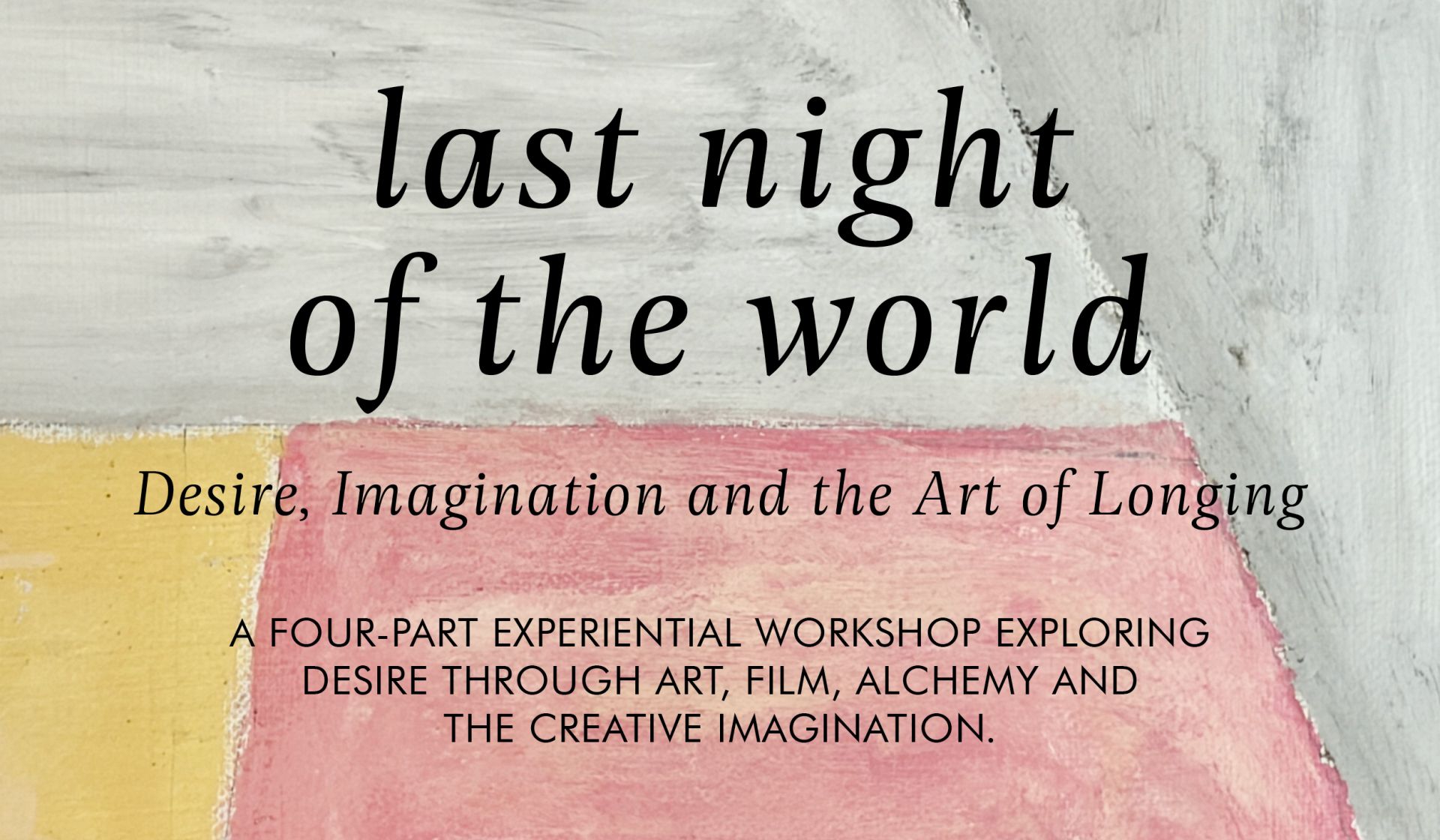
What do we desire?
What is it that calls to us through the image of another person,
an imagined life, a place, a memory, or something we cannot quite name?
And what happens when we begin to follow that desire into the
deeper regions of the psyche?
We may know very well what we want, yet remain strangely uncertain about why we want it, or what we imagine its fulfilment will give us.
Programme Overview
Cost:
Once-off $190,
or 2 monthly payments of $100
Four live online workshops, each two hours long.
• Friday, 27 November 2026
• Saturday, 28 November 2026
• Sunday, 29 November 2026
• Saturday, 5 December 2026
Time: 8.00 PM –10.00 PM (SAST)/
6.00 PM- 8.00 PM London/
1.00 PM -3.00 PM NYC
Format: Live online presentations with guided experiential applications
and group discussion.
These workshops will be recorded for students who are unable to attend live.
What do we desire when we desire another?
What is the place of longing in the life of the psyche?
And what might we discover if, for a moment, we allow desire to become an image?
We will also draw on selected cinematic moments from Wong Kar-wai's In the Mood for Love (2000), a film in which desire finds expression through glances, gestures, silences and the often-unbearable tension between what is felt and what remains unspoken.
The workshops will bring Jungian psychology into conversation with psychoanalysis, particularly Jacques Lacan's provocative understanding of desire and the objet petit a, the elusive object-cause of desire.
At the heart of the programme is an invitation to engage with desire imaginally: to encounter it through images, allow it to speak in its own symbolic language, and discover something about its psychological and spiritual significance.
And perhaps, eventually, we may find ourselves asking a rather different question:
Your Objet de Désir becomes a personal artefact of the enquiry: an image through which something of your relationship with desire has been given expression.
Workshop Details
Workshop Two: The Secret Rose Garden
Workshop Three: Objet de Désir
Workshop Four: In the Mood for Love
Who is this course for?
The programme culminates in an invitation to share this work with the group during our final workshop.
What Can You Expect from the Programme?
This is an opportunity to explore desire as a psychological, imaginative, erotic and spiritual phenomenon.
Across the four workshops, you will:
• Encounter two remarkable collections of symbolic and contemporary art, alongside selected scenes from In the Mood for Love.
• Explore Jungian ideas about symbols, projection, imagination, alchemy and psychological transformation.
• Engage with Lacanian ideas about desire, drive, fantasy and the objet petit a.
• Participate in guided imaginal exercises designed to deepen your awareness of your own experience of desire.
• Develop a personal creative work, your Objet de Désir, to be shared in our concluding workshop if you wish.
The workshops combine conceptual presentations, encounters with art and film, individual imaginal applications and opportunities for discussion.
Our intention is to create a space where desire can be approached with curiosity, seriousness, and imagination, allowing its contradictions, pleasures, frustrations, and mysteries to remain alive.
Presenters
No prior knowledge of Jungian psychology is required in order to participate in this course.
For more information email info@appliedjung.com.
Welcome to 'Last Night of the World'!
This is your go-to page to access course materials. Module materials will be made available in the course player below as they are released. Introductory reading materials have been made available below.
This course will start with our opening session on Sunday November 27th, 2026. Thereafter, you will receive an application on the Monday following each weekly live session, and a live session reminder on each Tuesday.
This course is also supported by a facilitated forum will be made accessible closer to the course start.
Course Schedule
Join Zoom Meeting
Live Session Dates and Times
Workshop #1 - Last Night of the World
Date: Friday. November 27, 2026
Time: 20:00 PM Cape Town; 18:00 PM London; 13:00 PM New York
Duration: 120 minutes
Workshop #2 - The Secret Rose Garden
Date: Saturday. November 28, 2026
Time: 20:00 PM Cape Town; 18:00 PM London; 13:00 PM New York
Duration: 120 minutes
Workshop #3 - Objet de Désir
Date: Sunday. November 29, 2026
Time: 20:00 PM Cape Town; 18:00 PM London; 13:00 PM New York
Duration: 120 minutes
Workshop #4 - In the Mood for Love
Date: Saturday. December 5, 2026
If uncertain of the time in your area, please check https://www.worldtimebuddy.com/.
Course Facilitators
Support Team Contacts
Jess M. can assist with administrative/finance inquiries, such as status of payment plans, etc. Email: jess@appliedjung.com.
For technical inquiries, reach out to caleb@appliedjung.com
or llewellyn@appliedjung.com.
Join Our Newsletter
Explore
About the Centre
Site Design by Sean Corey.