
Programme
Chinatown (Polanski, 1974) / presented by Christopher Hauke
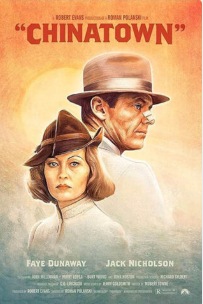
The name of the perpetrator (played by John Huston, in a rare moment that side of the camera) is Noah Cross. What a name. Flood, sacrifice and tension between opposites? Or simply the Old and New testament? Talking of names, why Chinatown? The writer Robert Towne quotes a cop, “You don’t know who’s a crook and who isn’t a crook. So in Chinatown they say: just don’t do a goddamned thing.” Chinatown is not a place it’s a state of mind.These are some of the things I will be talking about.
Bladerunner (Scott, 1982) / presented by Toby Reynolds
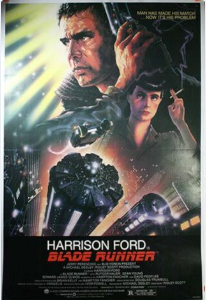
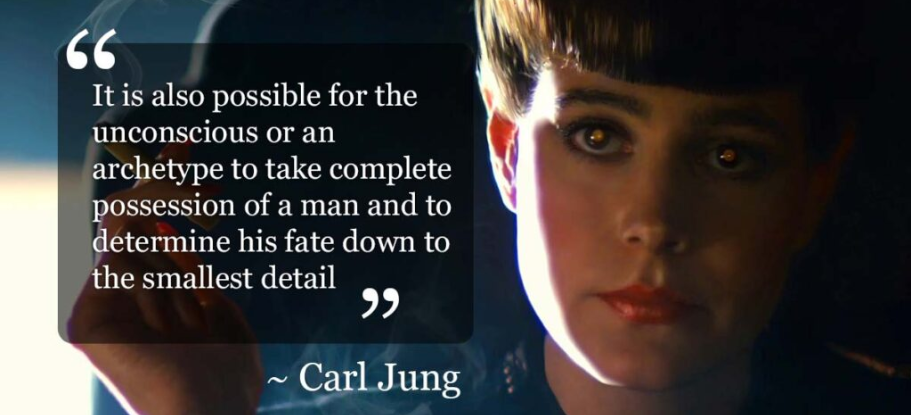
Ridley Scott’s landmark 1982 science fiction film, Blade Runner, has been lauded as one of the key films of both its genre, and of the 1980s. Despite a troubled production history and an initial lukewarm box office take, the groundbreaking production design and highly influential visuals ensured that the film successfully transcended its initial cult status, and it soon came to be regarded as a genre classic.
With a number of highly ambiguous onscreen individuative journeys present, there are rich rewards in analysing the film from a post-Jungian perspective. This talk will discuss and explore the various themes, discourses, archetypes and symbols that abound within the film, and map out how they are still relevant today. Finally, the film’s legacy in terms of the sequel Blade Runner 2049, (Villeneuve, 2017) will be explored in reference to the contemporaneous advance of AI and robotics and their potential cultural, social and societal impact.
It's A Wonderful Life (Capra, 1947) / presented by Christina Alvarez Lopez
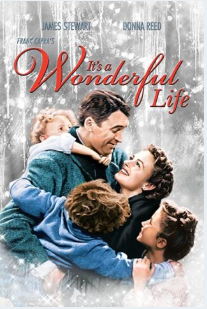
The Angel’s Message: It’s Wonderful Life’ begins at a critical juncture in the protagonist’s life: on Christmas Eve 1945, in Bedford Falls (NY), George Bailey is contemplating suicide. From this moment on – and with the help of George’s guardian angel – we will travel backwards, becoming witnesses of this man’s adventures: from his early years as an audacious child to his present as a husband and father of four. What has gone so wrong in George’s life? What darkness hovers over him? ‘It’s a Wonderful Life’ talks to us about the struggles of the individual – while painting a larger portrait of a place and a time in American history. The film has become a beloved Christmas movie for how it conveys Christian values and delivers its message of redemption and hope. In this talk, however, I will offer a Jungian reading centered on the process of individuation. In particular, I will focus on themes regarding midlife crisis (and the feelings of frustration, disorientation and despair that often accompany it); the role of the daimon/angel as guide and protector; and the difficult relation between the ego and the Self. All of this while looking at the elements that make of this film such a rewarding and enduring cinematic achievement.
The Godfather Trilogy (Coppolla, 1972-1990) / presented by Kevin Lu
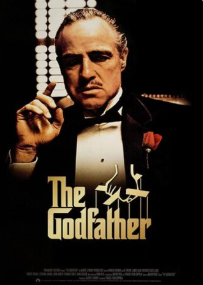
The Godfather Trilogy– widely regarded as one of the greatest achievements in cinematic history – resonates with audiences because of its ability, it will be suggested, to capture the complexities, phantoms, and invisible loyalties governing family life. The films are a springboard to exploring both Jung’s thinking on the psychology of the family and the powerful role of the family unconscious in shaping individual development.
The trilogy not only stages the emotional consequences of, and psychology behind, how we interact with family members, but it also expresses, when read from a depth psychological perspective, why we may be compelled to do so. Crucially, not only are we responsible for the family bonds we may cultivate, break and repair, we are equally accountable for the relationships we foster with an internal cast or ‘family’ of archetypal figures, which we ignore at our peril.
Gaslight (Cukor, 1944) / presented by Judith Cooper
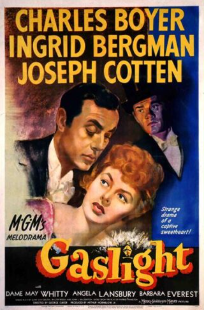
The term Gaslighting gained traction, becoming ubiquitous, after the 2016 U.S. election; by 2022 it was named “word of the year.” This 1944 film, Gaslight, based on the 1938 play, is the source of the term. In the film, the image of the gaslight is a potent living symbol representing her ego consciousness as it is overtaken, possessed by his manipulative control of her and her own identification with the negative animus figure of her husband. The film then becomes a critique of romantic love, of pressures society places on women to commit themselves to men without question, without discernment, of suppressing a connection to their own body-knowing intelligence when it conflicts with a romantic ideal in intimate relationships. We will explore how the film reveals the embodied movement and unfolding of the archetypal energies of the trickster and the animus, in both their negative and positive poles. This classic, award-winning film, resonant of a Bluebeard fairy-tale, continues to illuminate relational dynamics in our patriarchal culture.
Marnie (Hitchcock, 1964) / presented by Ronnie Landau
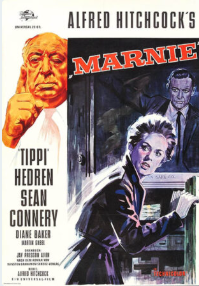
Hitchcock, a rather mercurial character, struck me as an excellent choice for a Jungian approach to films. His themes so often deal with the shadowy aspects of the human psyche. We are revolted, captivated, terrified, disgusted, and fascinated by his frank and mysterious approach to the complexities of the human spirit. The movie “Marnie” released in 1964 was Hitchcock’s 49th film. The film circumambulates around an innocent looking, beautiful, mysterious dark female protagonist called Marnie. Is she a thief, a seductress, a young woman suffering from a severe neurotic condition, an anima projection of the male protagonist Mark? What does she illicit in the viewer? This controversial film presents sexual and dark erotic themes as well as it amplifies themes of personal and collective aspects of Carl Jung’s notion Shadow. In many ways it painfully reveals attitudes towards the feminine, paternity and patriarchal violence that continues to plague humanity. How do we relate to feminine aspects of ourselves? What needs greater healing and integration? What does it evoke in you?
Time
Requirements
You will need a total of 11 hours for the webinar content.
Programme
Faculty
CRISTINA
ALVAREZ LOPEZ
KEVIN
LU
JUDITH
COOPER
RONNIE
LANDAU
CHRISTOPHER
HAUKE
TOBY
REYNOLDS
Join Our Newsletter
Explore
About the Centre
Site Design by Sean Corey.