Willy-nilly, we move through life, shaped by invisible forces, pursuing desires that never quite satisfy us, frustrated and thwarted by a life that refuses to unfold as we imagined it would. We fall into repeating conflicts, become caught in patterns we cannot seem to escape and waste years of our lives enchanted by illusions. Beneath our conscious intentions, other forces are at work, quietly shaping what we see, what we desire, whom we love, and the lives we create.
It is often easier to recognise these forces at work in someone else’s life than in our own. Perhaps this is why characters in books and films fascinate us. As observers, we witness the forces gathering around their choices, the pattern taking shape across seemingly unrelated events, and the illusion within which they are living.
Coming-of-age stories draw our attention to the gaze through which we first come to know ourselves. Through their lens, we see how the judgements, expectations and values of family, culture and society become the inherited gaze, casting a veil through which we see ourselves. In Jane Eyre, we see the inherited gaze at work as young Jane is repeatedly told that she is difficult, troublesome, ungrateful and unworthy of love. As the novel unfolds, we witness her struggle to distinguish her own experience of herself from the identity that family, school and society have placed upon her. In Bridget Jones’s Diary, the inherited gaze constellates a relentless inner commentary, evaluating her appearance, weight, career, relationships and life choices against standards she has absorbed from the Other. What began as the gaze of others has become the gaze through which she now judges herself.
In Dead Poets Society, we meet a different veil, one that shapes how we see others. John Keating becomes a numinous figure for the boys, embodying the freedom, courage and authenticity that the boys long to live. The veil magnifies these qualities into something larger than life, revealing qualities within themselves that seek recognition. The challenge of the story is whether they can eventually reclaim these qualities as their own rather than locating them solely in their teacher.
For every great protagonist we meet an antagonist, hero and villain bound together, each embodying what the other is not. Fight Club takes this familiar structure to its psychological extreme: the man the Narrator experiences as radically other, turns out to be himself. Unconscious of these veils, we mistake them as being objectively true and so Jane experiences the judgements of others as the truth about who she is; the boys experience the qualities they project onto Keating as belonging to him.
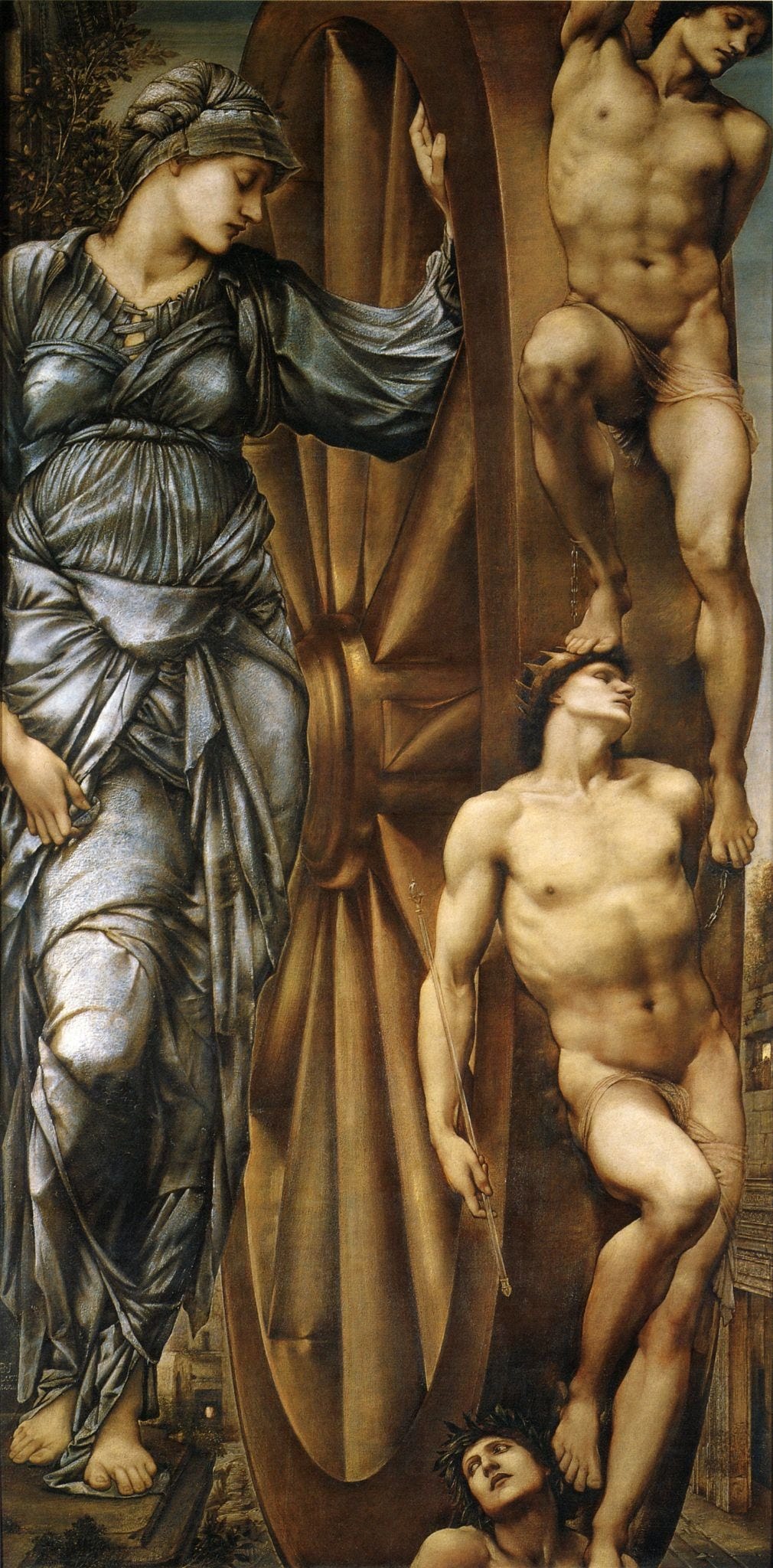
Jung recognised the same archetypal forces at work within our own lives that we encounter so vividly in myth, literature and story. We catch sight of these forces — our introjections, projections, complexes and archetypal patterns — in the stories we tell ourselves. We glimpse them in how we see ourselves, others, and the world around us. We feel their presence in those places where we repeatedly find ourselves stuck, thwarted or frustrated. We experience ourselves as being at the mercy of fate, unaware of the unconscious forces through which the narrative of our lives is being forged. It is in these moments that we might become curious and begin to explore the invisible forces shaping the story of our life.
As these forces enter our awareness, our relationship with them changes. That which has lived unconsciously can now be met consciously, bringing the conscious and the unconscious into dialogue. Like Dorothy in The Wizard of Oz, we pull back the curtain and begin to see what has been operating behind it: we question the inherited gaze, withdraw the projection, recognise the archetypal narrative and meet the complex. With each recognition, what had been lived as fate begins to reveal the developmental task hidden within it. It asks something new of us and draws into consciousness what has remained unlived, undeveloped, or unknown. For Jung, this encounter carries the possibility of transformation. He gives us a wonderfully evocative image for this relationship:
“Consciousness and unconscious do not make a whole when one of them is suppressed and injured by the other. If they must contend, let it at least be a fair fight with equal rights on both sides. Both are aspects of life. Consciousness should defend its reason and protect itself and the chaotic life of the unconscious should be given the chance of having its way too – as much of it as we can stand. This means open conflict and open collaboration at once. That evidently, is the way human life should be. It is the old game of hammer and anvil: between them the patient iron is forged into an indestructible whole, an individual.” (Jung, Collected Works, vol. 9i, §522)
Jung’s image of being forged between hammer and anvil finds resonance in the words of the English poet John Keats, who described the world as a “vale of Soul-making.” The unconscious continually draws us into encounters with life, bringing us into relationship with those parts of ourselves that have remained outside consciousness. In this vale of soul-making we encounter the veil of introjection, discovering the tension between our adaptation and our individuality, between the inherited inner voices and our authentic voice. Through the veil of projection, we encounter the tension between the person we consciously know ourselves to be and the qualities we unconsciously attribute to others. Through the veil of archetypes, we encounter the tension between our immediate experience and the archetypal narrative through which that experience is being organised. Through the veil of complexes, we encounter the tension between our conscious intentions and the autonomous reactions that arise from the unconscious.
Each veil, as it becomes conscious, brings us into an encounter with an opposite: the inherited and the individual, the conscious and the projected, the immediate and the archetypal, intention and autonomy. What has remained neglected, disowned, or unknown enters consciousness and stands in tension with the attitude we have been living. As we hold these opposing positions in consciousness and allow them to enter into relationship, something new can begin to emerge. As Jung reminds us, “Life is born only of the spark of opposites.” (Jung, Collected Works, vol. 7, §78)
Holding the tension of opposites means allowing contradictory realities to coexist within consciousness, becoming curious about what each carries and what each asks of us. As the ego bears the conflict consciously, the opposites enter into dialogue and something new begins to emerge. What was previously held apart can enter into a new relationship, giving rise to a new attitude and revealing the meaning seeking to emerge. The film, A Christmas Carol, illustrates this meeting of the opposites. We are introduced to Scrooge who lives almost entirely through the principles of discipline, productivity, self-protection, and control. The ghosts confront Scrooge with everything that had been excluded from his conscious attitude: relationship, generosity, grief, joy, vulnerability, love, and community. They lead him to the emergence of a fuller personality capable of holding both positions.
One of the great pleasures of reading fiction is witnessing the moments when a character no longer inhabits their old story, when something they have seen, discovered or understood changes the way they see themselves and the world around them. The story they thought they were living gives way to new possibilities. We are moved by these moments because, unconsciously, we recognise our own capacity to outgrow the stories we have been living and enter a new story shaped by greater consciousness and freedom, deeper connection, a sense of meaning and purpose, and a fuller engagement with life.
Meeting the veils of illusion then becomes our quest guided by the question: What is life inviting me to become?
Tasha Tollman a facilitator and mentor at The Centre of Applied Jungian Studies, encountered Jung for the first time in 2006. She graduated from the Master Class and the Clinical Concepts Programme in 2014. Having directly experienced the transformative power of Jungian psychology, she enthusiastically shares her journey and knowledge guiding others along the path into the depths of the psyche. With her degrees in Adult Education, Training and Development (ETDP UJ) and NLP she continues to mine the depths of her psyche, describing the journey as exciting, enriching and meaningful.
The Centre for Applied Jungian Studies is pleased to host the author of this article as she presents an in-depth, 10-week course on the topic. If this article piques your interest, please find out more and register for Veils of Illusion on the Centre’s website.