Jun 8 • Byron Gaist

The Yoga of Individuation

The title The Yoga of Individuation is deliberately ambiguous. It suggests a meeting between two great traditions: yoga and Jungian psychology. One is over four thousand years old; the other little more than a century. This course explores what happens when they are brought into dialogue.  Maybe the invitation is not for a sumptuous formal dinner which would take literally years of preparation, a long list of esteemed guests and detailed event planning; but perhaps what I had in mind in creating the course was more of an opportunity for these disciplines to meet as friends for a pleasant afternoon over coffee and cake in a relaxed atmosphere! 

The ambiguous title makes the prospective student naturally wonder: will we be focusing on individuation as a psychological process, and inventing a ‘new’ yoga to reach this goal? Will we be bringing out the aspects of individuation which pertain to the science and art that is yoga?  Indeed, will we be looking at the ways traditional yoga helps us individuate? Is individuation itself a yoga? I suggest all these answers may be correct to some extent.  As an Applied Jungian Practitioner, Registered Counselling Psychologist and licensed psychotherapist with over three decades of professional experience, and a student and qualified teacher of hatha and yin yoga, I am accompanied by my Acharya and fellow course instructor Tanya Savitri Popovic, whose experience as a yoga teacher, hypnotherapist and leadership consultant is both extensive and rich.  While neither of us claims to be a final authority on these vast traditions, we have spent many years living, teaching, and working within them professionally. 


It seems to me too, that this interface is rich, deep and vast in area – with roots beginning in ancient India and ending in modern Switzerland, and branches extending over the whole globe.  Beginning with his encounter with the Taoist text, The Secret of the Golden Flower (1929), Jung entered a period of serious reflection, writing and lecturing on Eastern contemplative practices culminating in his seminar on Kundalini yoga (1932) and continuing with sporadic essays in the 1930s and 1940s.  Yoga remains important throughout that period for Jung, becoming one element within his larger comparative study of religion, symbolism, alchemy, and mystical experience.  Although after this period he focused more on these latter themes, yoga is always in the background for Jung as one example of humanity's symbolic understanding of psychic transformation.

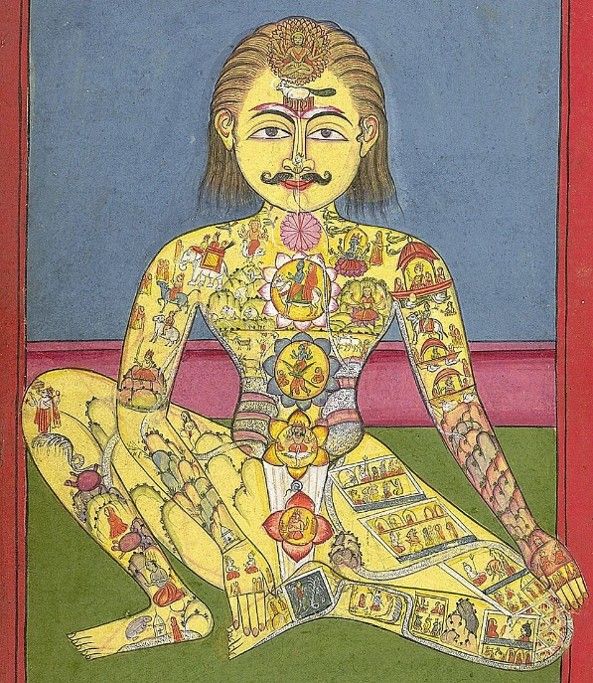
Modern yoga practitioners often read Jung to understand chakras, Kundalini, and spiritual awakening, but Jung himself was not primarily interested in yoga as a spiritual discipline, he was interested in yoga as a symbolic language for describing the development of consciousness.  For Jung, the chakra system was less a map of subtle anatomy than a map of individuation.  The ascent through the chakras becomes a journey through layers of the psyche, culminating not in liberation from the world but in the realization of the Self.

Individuation and yoga both begin with the same question: Who am I beneath the roles I have inherited, the wounds I have suffered, and the expectations placed upon me? If that question speaks to you, we would be delighted to explore it together this summer.  In this course, Tanya and I will not put words in the mouths of our wise friends; we have invited them for coffee and cake to hear what they have to say for themselves.  What I mean is, that the integrity of these disciplines will be deeply respected, their similarities and parallels highlighted, their differences preserved.  We know first-hand that both yoga and Jungian psychology are powerful methods of transformation; we aim to show that mindfully engaging them together gives added value to the seeker.  The course will provide practical tools for self-observation, symbolic understanding, and somatic awareness. Participants will learn to understand key Jungian concepts through embodied experience, and key yogic concepts through psychological reflection.  Whether you are a yogi who would like to understand Jung, a Jungian who would like to explore yoga, or a seasoned practitioner of both, we invite you to take the time this summer to deepen your somatic and psychological knowledge and practices by attending The Yoga of Individuation over six fortnightly two-hour sessions, aided by a monitored community forum which will help you work between the live zoom meetings through structured applications and to discuss all related issues with your fellow students and facilitators. 

Click here to learn more and register.