
Imaginal Individuation: The Life of Images

Jul 15 / Stephen Farah
“Call the world if you please, ‘The vale of Soul making.’ Then you will find out the use of the world.”
John Keats

There are certain images that accompany us throughout our lives.

A childhood photograph.
A recurring dream.
A painting unexpectedly encountered.
A room.
A landscape.
A face.
A film scene.
A tree standing alone against the horizon.
A piece of music that somehow becomes inseparable from a particular season of one's life.

Most of us assume that we simply remember these images. We think of them as fragments of memory, preserved somewhere in the archive of the past.

But what if the opposite were true?

What if certain images continue to remember us, or unconsciously accompany us? Shaping our imagination, our values, our desires, and our sense of who we are becoming?

What if they are not merely memories, but living presences that participate in the unfolding of a life?

This possibility lies at the heart of what I have come to call Imaginal Individuation.

The term imaginal derives from the French philosopher Henry Corbin, who introduced the expression mundus imaginalis to describe a mode of reality disclosed through the imagination. Corbin was careful to distinguish the imaginal from the imaginary. The imaginary refers to fantasy or illusion; the imaginal refers to a genuine mode of perception through which realities inaccessible to purely conceptual thought become visible.

C.G. Jung arrived at a remarkably similar insight from a different direction. For Jung, the imagination is not simply the faculty of fantasy but the living medium through which the unconscious communicates with consciousness. It is through dreams, symbols, fantasies, myths and images that the psyche reveals itself. James Hillman later developed this insight further, proposing that images are not merely representations of psychological processes but possess a life and autonomy of their own.

This is what Hillman, speaking about Jung and his regard for image, has to say about the role of images in the life of the psyche,

“He considered the fantasy images that run through our daydreams and night dreams, which are present unconsciously in all our consciousness, to be the primary data of the psyche. Everything we know and feel and every statement we make are all fantasy-based, that is, they derive from psychic images…. Every notion in our minds, each perception of the world and sensation in ourselves must go through a psychic organization in order to ‘happen’ at all. Every single feeling or observation occurs as a psychic event by first forming a fantasy-image.”


Taken together, these thinkers suggest something both simple and profound: The psyche thinks in images before it thinks in concepts.

Individuation, Jung's signature psychospiritual concept, describes the lifelong process of becoming who we uniquely are through an ever-deepening relationship with the unconscious. Imaginal individuation asks whether this process unfolds, in no small measure, through our relationship with the images that accompany us throughout our lives.

This year's Art of Individuation grew directly from that question.

For several years, I have had the privilege of teaching this programme alongside artists, psychologists and scholars, exploring Jung's suggestion that "the art of life is the most distinguished and rarest of all the arts."

Over time, I noticed something. Students rarely remembered theoretical expositions. They remembered an image, a painting, a dream, a sculpture, a scene from a film, a photograph that had remained inexplicably alive within them for decades.

Again and again, I found myself asking: why do certain images refuse to leave us?

The philosopher Gaston Bachelard once observed that we never entirely leave our childhood home. Long after we have moved away physically, we continue to inhabit it imaginatively. Our first house becomes part of the architecture of the psyche. Perhaps the same is true of many of the images that accompany us throughout life. We do not simply remember them; they continue quietly to shape the way we inhabit the world.

This intuition also seems deeply relevant to the age in which we live.

The cultural philosopher John David Ebert argues that we inhabit a world "after metaphysics", a world in which the great symbolic frameworks that once oriented and structured culture have fragmented. Increasingly, each of us is called upon to assemble meaning from the fragments of inherited traditions, personal experience, memory, art and imagination.

This is precisely the cultural landscape and psychic situation to which Jungian psychology speaks.

If the great collective myths have become less universally available, the psyche has not ceased producing images. Dreams continue. Works of art continue to move us. Certain places continue to call us. Certain photographs and photographic memories remain mysteriously alive in the psyche, continuing to animate us. The symbolic life has not disappeared; perhaps it has become more personal, more individual and to some degree more of an inner experience.

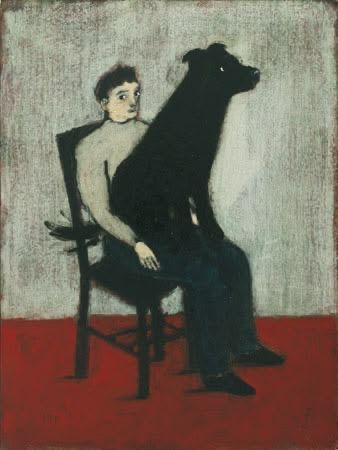
A few months ago, I had a dream in which I found myself playfully wrestling with a large black dog. I will resist the temptation to analyse the dream here. What matters is something much simpler. The dream image hasn’t left me. It continues to live within me.

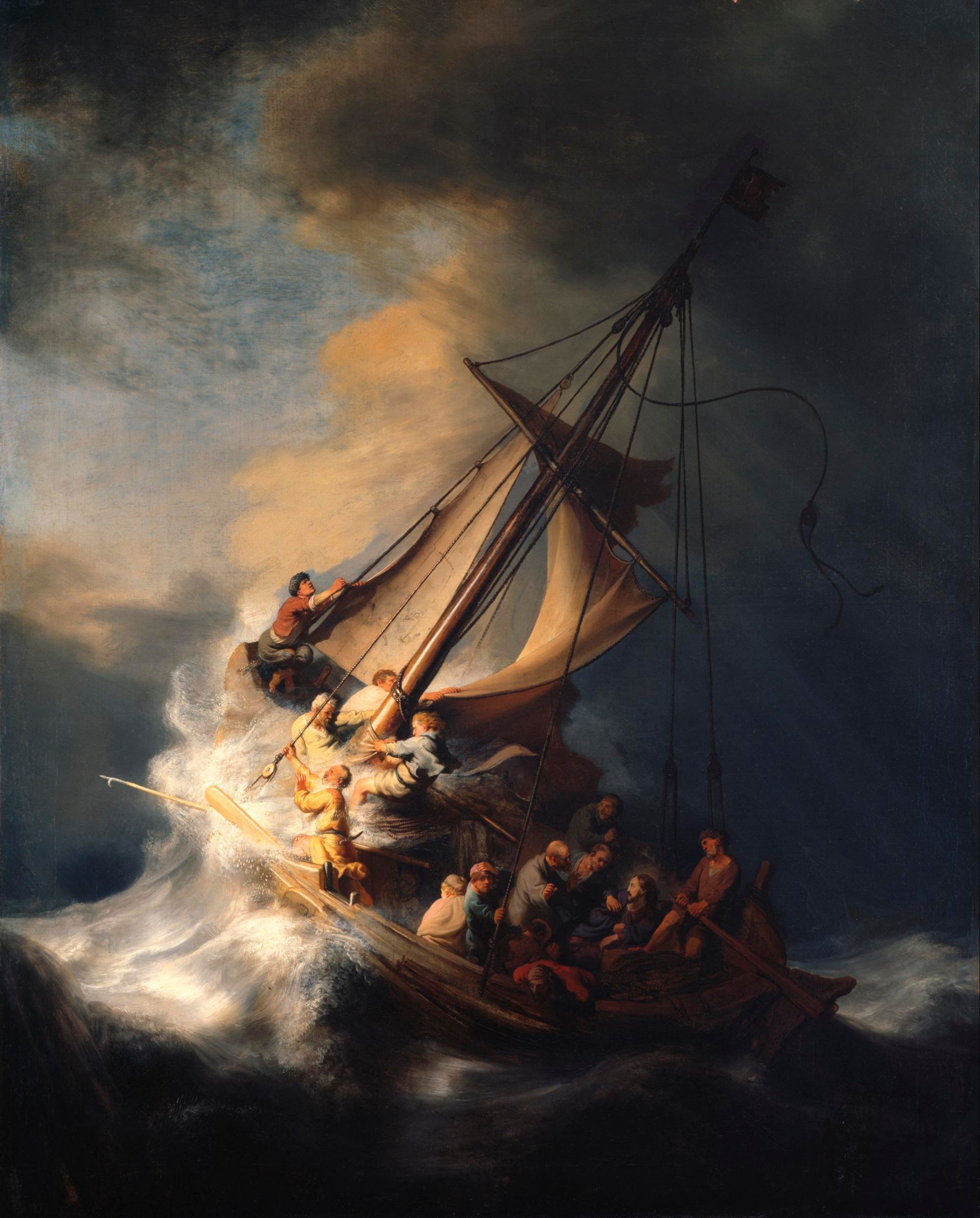
Rembrandt’s Sea of Galilee
Over time, it has gathered around itself memories, associations, feelings, earlier dreams, works of art and religious images that I had not previously recognised as belonging together. Looking back, I can now see that this dream did not arise in isolation. It belongs to a constellation of imaginal moments extending back several years: an unexpected encounter with Rembrandt's Storm on the Sea of Galilee, a dream centred upon the sun as an image of the Self, and a deeply moving experience of the religious art and architecture of Rome.

None of these images can be reduced to a single interpretation.

Rather, they form a psychic tapestry.

Together they have become what Jacques Lacan beautifully called a point de capiton—a quilting point around which a field of meaning gradually gathers coherence. They have become imaginal anchors in my own process of individuation.

I am not an outlier in this regard, for all of us possess or are possessed by such images. Images that continue to accompany us long after we have forgotten why they first mattered. This year's Art of Individuation is an invitation to discover them.

Over six weeks, through lectures, artistic conversations, reflective workshops and creative practice, we will explore those images that have shaped our lives. Not simply to interpret them, but to enter a deeper relationship with them; to amplify them, contemplate them, and perhaps discover what they have been asking of us all along.

The programme is structured around four imaginal movements:

The Brutality of Fact – images that shattered our naïve participation mystique and Edenic consciousness.

The Persistence of Memory – images that have never ceased accompanying us.

Landscapes of the Soul – inner places that continue to orient our psychological life.

The Weight of Light – images that illuminate who we are becoming.

No artistic experience is required! The artistic process is not about producing beautiful objects. It is about cultivating a deeper relationship with the images through which the psyche has been speaking.

Imaginal individuation is an invitation, it is the discovery, uncovering and amplification of yourself through conscious relationship with the images that have accompanied, formed, and continue to disclose your unique pattern of being and becoming.

I hope you'll join us for this year’s Art of Individuation as we explore…

The Life of Images.

——————————————————————————————

To learn more about this year's Art of Individuation and register, click here


Images shown:
Brian Kershisnik "Lap Dog"
Rembrandt’s "The Storm on the Sea of Galilee"